

Guides
Build Enterprise-Ready Integrations with Paragon's Self-Hosted Offering
Paragon can be completely self-hosted in your cloud environment. With Paragon' self-hosted option, you leverage Paragon's integration platform to rapidly build product integrations, while ensuring that your users' integration data is fully contained in your own infrastructure.

Jack Mu
Developer Advocate, Paragon
5 min read
"Enterprise-ready" is an all-encompassing term that encapsulates:
Data Ownership & Security
Bleeding-Edge Performance
Monitoring & Observability
Integration platforms like Paragon, Prismatic, and Merge need to not only provide seamless interfaces to work with your users' CRM, file storage, messaging, and other integrations' data, but also provide enterprise-ready requirements.
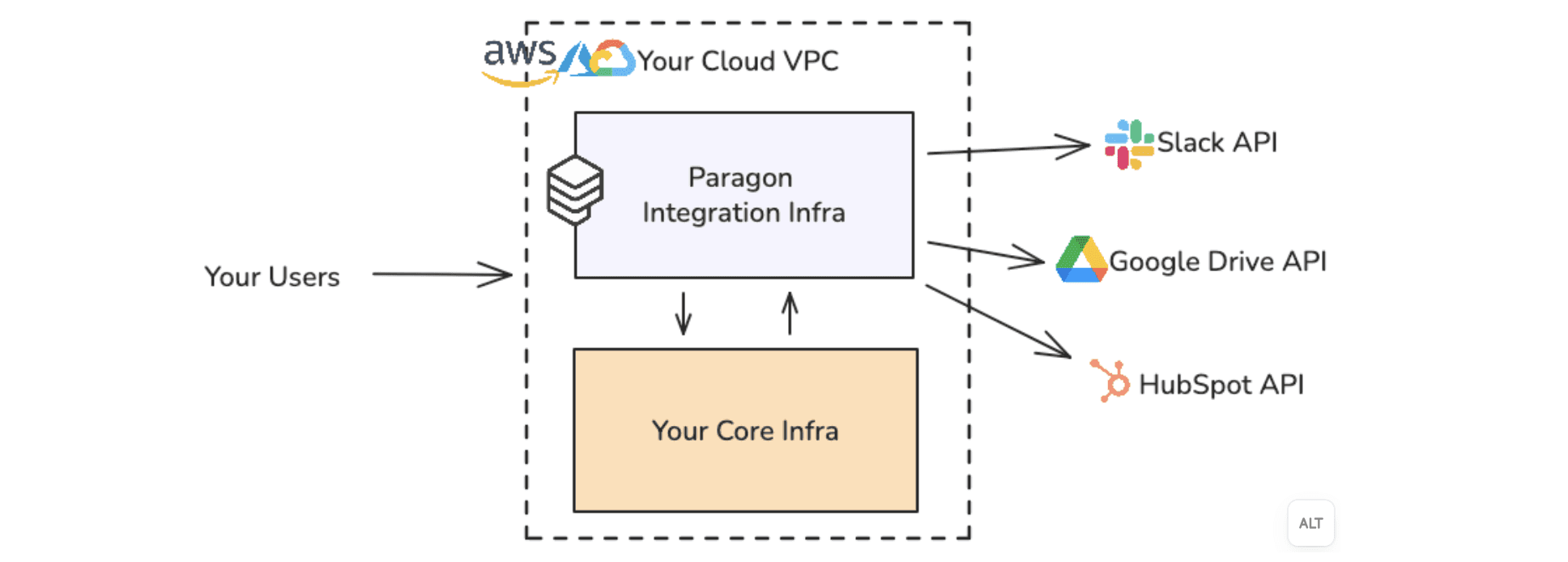
Paragon's self-hosted infrastructure is a one-of-a-kind model that truly gives you full data ownership, optimized performance under high workloads, and in-depth monitoring. Paragon opens the door to enterprise opportunities and regulated industries that you can now build for, with an integration platform that can be completely run in your cloud VPC.
This guide will walk you through how Paragon's self-hosted, Bring-Your-Own-Cloud (BYOC) model works, focusing on how Paragon offers:
Full ownership of your users' integration data
Infrastructure hosted on your VPC that can handle high workloads with the lowest latency
Monitoring on both infrastructure and end-user metrics
Ownership of integration data
Why data ownership matters
Before going into how Paragon's self-hosted model works, here are a few reasons why data ownership matters.
Your product can enter regulated industries like healthcare and government with stricter data retention and related policies.
Your product can stay compliant with standards like GDPR for your customers that expect their data to be held only in your cloud infrastructure.
Your team has sole ownership and access over data from integrations that your users have connected to and granted.
Your SaaS can offer forward deployments where your product infrastructure, along with your integration infrastructure, can be deployed in your customers’ cloud environment.
Even if your product isn't currently built for customers with strict data requirements, at some point you may want to sell to these types of customers. At that time, you'll want an integrations platform with both a cloud offering and a self-hosted offering so you can easily transition to serving your customers with tighter security requirements.
Full data control with Paragon
Paragon's self-hosted infrastructure is compatible with the major cloud providers: AWS, Azure, and GCP. With a Paragon license key and our Terraform installer, Paragon actually offers 3 different types of self-hosting options:
Unmanaged self-hosted: for users with devops teams that would like to self-host Paragon and install with our Terraform installer and helm charts
Managed self-hosted: for users who want the security and performance benefits of self-hosting, but without installing and managing Paragon infrastructure - you give our devops team restricted access and we’ll install and manage your integration infrastructure for you!
Forward deployed self-hosted: for users who have customers with strict data guidelines. We can deploy and host Paragon Infrastructure in your customers’ cloud VPC
All Paragon databases, where your users' integration data is held, will be held in your VPC's Postgres, S3-like object store, and Redis. Integration data can include file synced from file storage integrations like Google Drive, and even user tokens to 3rd-party APIs. This data will only be accessible from your VPC.
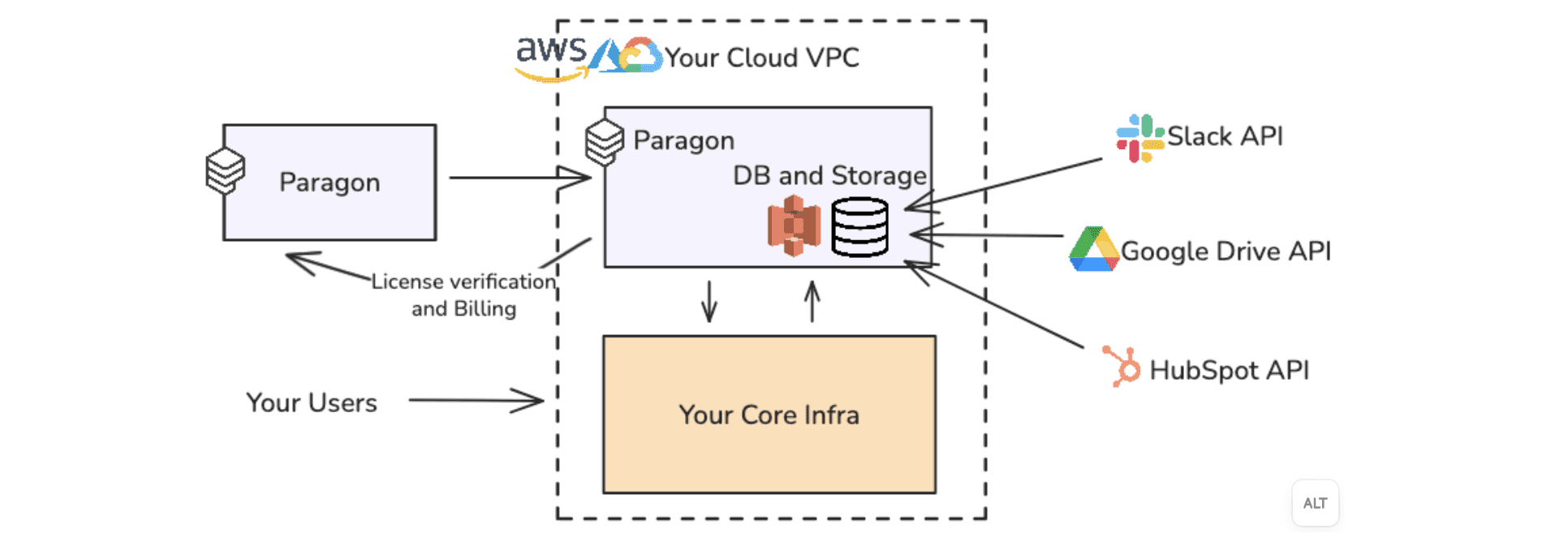
Paragon's services that interact with integration APIs also live in a Kubernetes cluster hosted in your VPC, which means your users' integration data never touch services outside of your VPC. The only data that interacts with Paragon's cloud infrastructure is for billing, license verification, and anonymized usage analytics (which can be disabled).
Optimally configured infrastructure
Why self-hosting infrastructure matters
Self-hosting integration infrastructure is a better option than using a cloud offering for the following use cases:
As mentioned in the previous section, when you need full control and retention over your users' integration data
When your product requires the highest levels of scale and concurrency from your integrations platform (10M+ requests per month)
When you need your infrastructure in specific availability zones outside of the U.S. and Europe
When you need your integration infrastructure forward deployed in your customers’ cloud environment
Self-hosting infrastructure ensures integration data and credentials are entirely contained in your cloud VPC. All of the services that call integration-provider APIs, sync integration data, and run workflow executions run completely in your environment (or your customers’ environment for forward deployments).
Paragon infrastructure in your VPC
All of Paragon's services can be deployed in your cloud environment's VPC. As diagrammed above, the only external interaction your self-hosted Paragon instance needs is license verification and billing-related metadata (Paragon also offers solutions where a complete "airgap" is required).
Paragon services handle everything from 3rd-party authentication, to key storage, workflow executions, and proxy requests. Self-hosting Paragon in your own cloud, your product can fire billions of API requests per month to integration APIs. Paragon's architecture can handle these high workloads, auto-scaling services to handle spiky traffic and retaining jobs in dedicated queues to ensure successful execution.
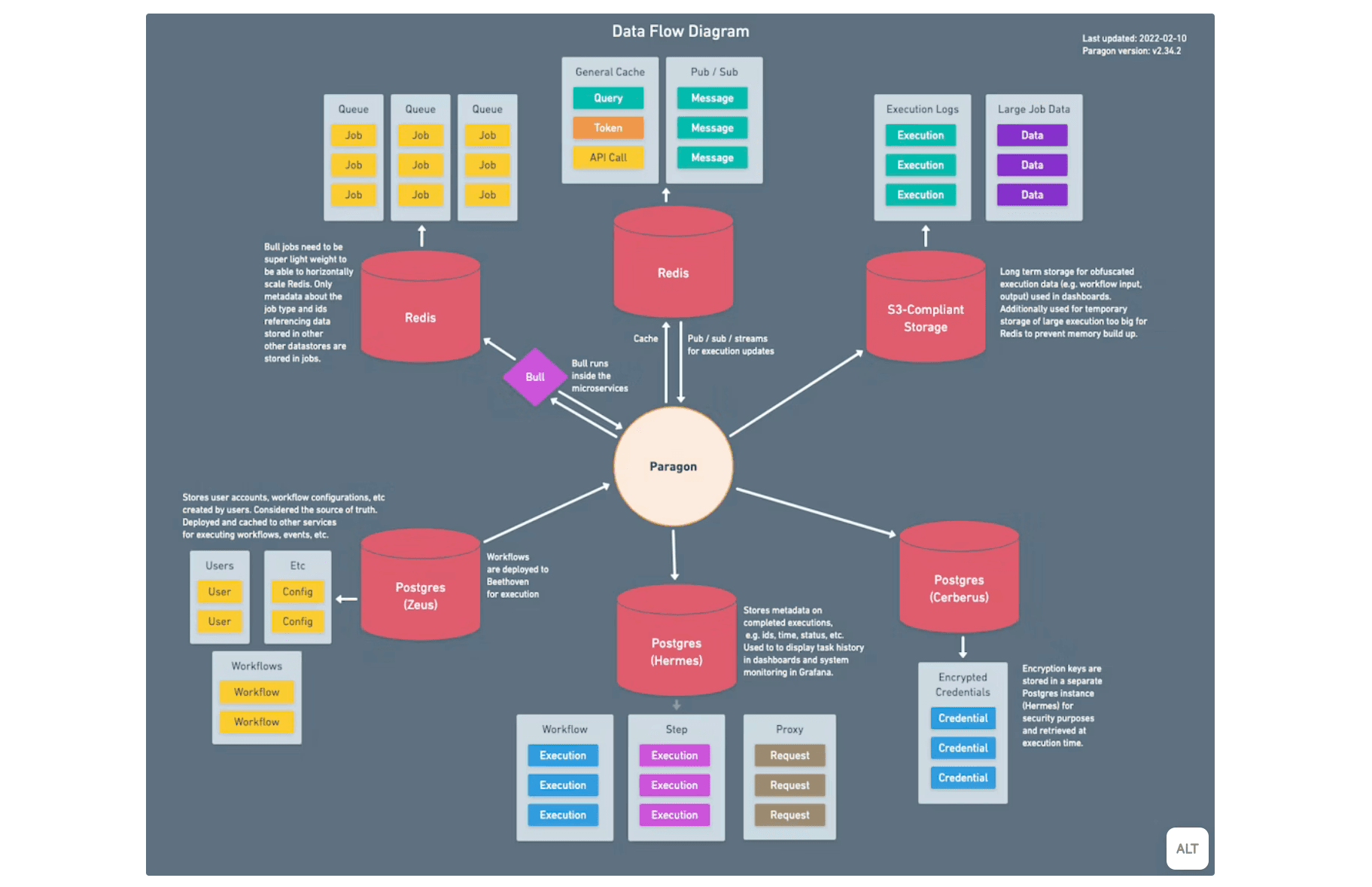
Not only is hosting Paragon's infrastructure in your own cloud the most performant option for enterprise customers, but it also provides the best monitoring experience for your integration workloads and infrastructure.
Dedicated monitoring and observability
Why monitoring matters for enterprise products
Whether you’re on cloud or self-hosting, Paragon’s dashboard offers in-depth monitoring on how your end-users are using their integrations with task history and event logs. End-user monitoring allows you to have visibility into how your customers are using their integrations, and to help with debugging when integration errors occur.
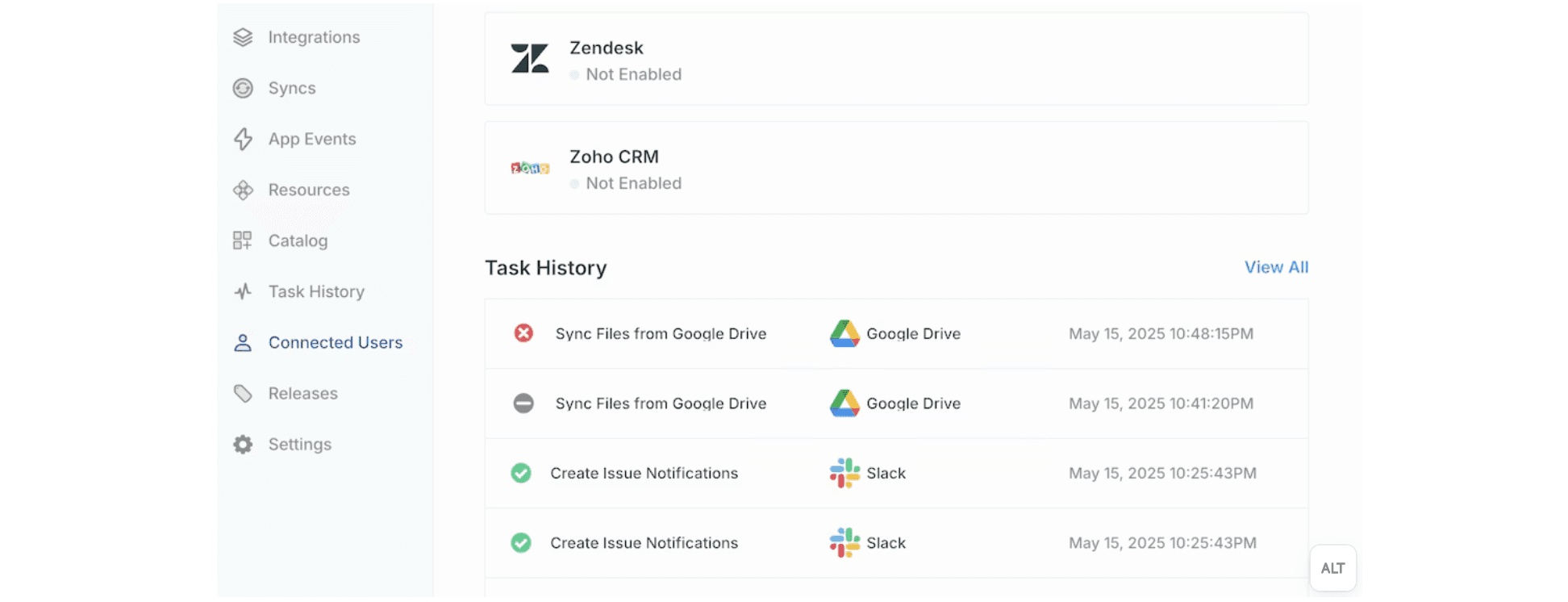
Deeper metrics and alarms are helpful for monitoring the integration infrastructure that power your integration features. Infrastructure-level metrics, like response-time and wait-time can be used to optimize your infrastructure for your specific usage patterns, such as using spot instances and customizing your auto-scaling policies.
Advanced monitoring on Paragon self-hosted infrastructure
Paragon uses Grafana, Prometheus, and other exporters to collect metrics from different load balancers, Redis queues, and microservices hosted in your cloud VPC. You can visualize all of your metrics in custom dashboards.

These metrics will also trigger alarms to your engineering team whenever these metrics see high deviations or approach dangerous thresholds.
In unmanaged self-hosted plans, your devops team can use these metrics to minimize cloud costs, optimize performance, and set custom alarms. We recommend this plan for experienced devops teams that are comfortable installing and managing cloud infrastructure and Kubernetes.
In managed self-hosted plans, Paragon’s engineering team can do this for you, with the bare minimum access that your devops team gives us. Managed self-hosted plans provide the security and performance of self-hosting Paragon, without the devops lift of installing and managing your own integration infrastructure.
*These plans also apply to forward deployed instances where you may need Paragon to run in your customers’ VPC, when serving customers who need this type of requirement.
Wrapping Up
Paragon is a key piece of infrastructure in our customers' tech stack. Paragon's services were built to both:
Reduce integration development friction by handling 3rd-party APIs and authentication
Handle enterprise requirements through a self-hosted model that keeps you in control of your data, your infrastructure, and your monitoring
Learn more about our self-hosted offering in our on-prem docs and book a call with our team so we can help you get started with the most enterprise-ready integration platform.
TABLE OF CONTENTS
Ship native integrations 7x faster with Paragon
Related articles








Ship integrations 10x faster with enterprise-grade infrastructure.
Trusted by enterprise platforms and AI products to handle integrations at scale.